
Post
How to Effectively Design an Aquaponics System
The optimum process to follow when designing an aquaponics system or farm of any size.
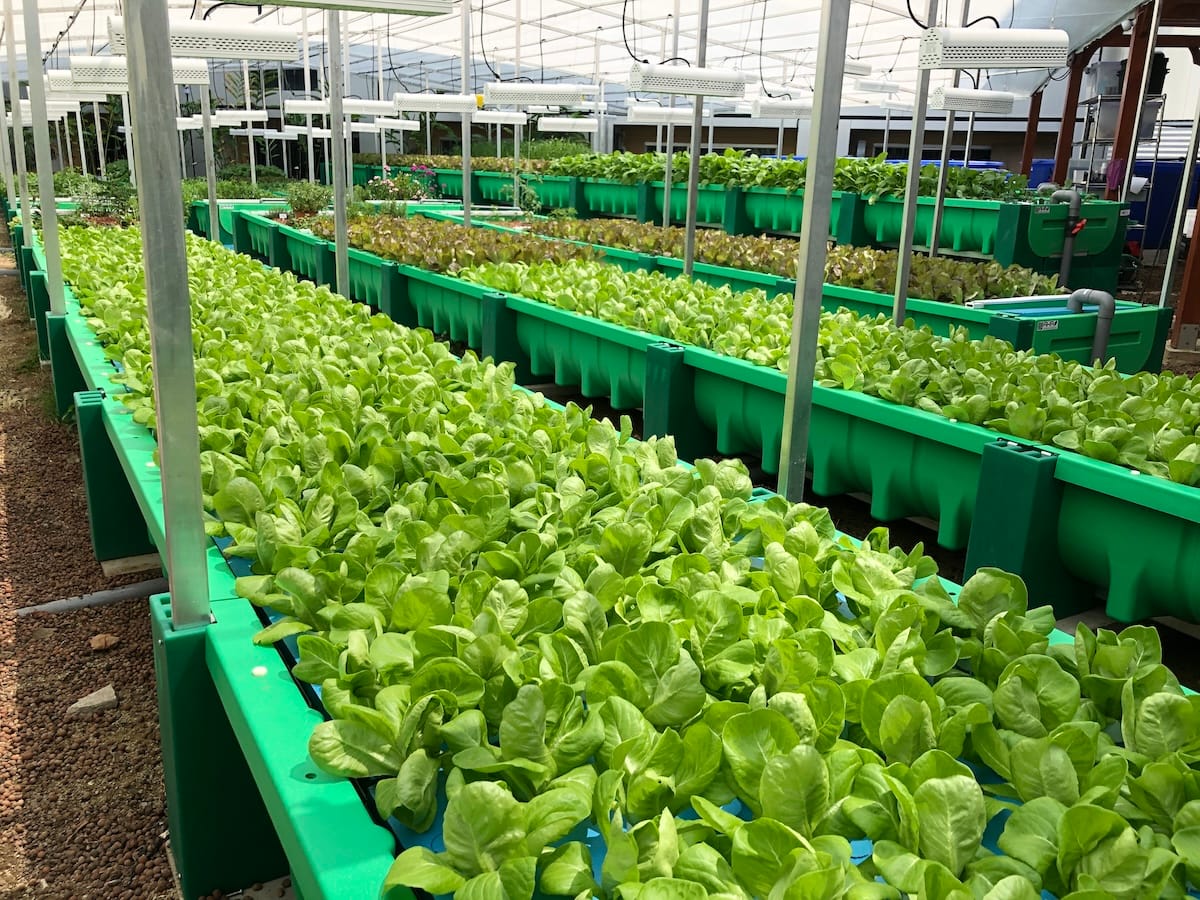
You are a beginner or expert aquaponics grower considering building a home aquaponics system or an aquaponics greenhouse of any size. This article is for you. The same process applies for aquaponics systems for beginners using AHAS Ceres Calculator and Ceres Botanical, and for intermediate or advanced growers using Ceres Production or Ceres Professional.
The aquaponics farm design process
The objective is to size all farm components to achieve the targeted monthly farm production and ensure the plants receive sufficient nutrition for optimal growth rate.
In a hydroponic system, nutrient distribution can be easily adjusted while the farm is in operation. But in an aquaponics system, it is paramount to ensure that the “fish engine” is designed with sufficient power to meet the nutrient requirements of our desired crops. This must be done during the design phase,
We start by evaluating the required nutrient quantity. A simple method is to plan to feed a specific quantity of fish food per unit area of plant. Experts worldwide have been debating this number for years and advise a wide and average range of 30g to 120g per square meter.
At AHAS, we have spent over a decade testing many plants and measuring the amount of fish food required to keep the water’s mineral content stable at a level where the plants grow well. We regularly tested the water for the basic minerals the plants need: Nitrogen, Phosphorus, Potassium, Magnesium, Calcium, and Iron. At the same time, we recorded the monthly production of these vegetables and the growing area. We incorporated this database into the Ceres Production App, which can therefore predict monthly production for these vegetables and calculate the quantity of fish food required for the farm, based on each plant and the quantity we want to grow. We continue to test new plants regularly.
How to calculate the farm’s required growing area
To design our farm, we start by listing our targeted crop mix and the monthly production of each vegetable. AHAS Ceres Production groups these plants into five types. These plant types are based on plant size and, therefore, on the required vertical spacing between levels. This spacing needs to include space for the grow lights. For example, we give lettuce a 40 cm (1.3 feet) spacing and Kale a 1 meter (3 feet) spacing. Tall plants like tomato can only be grown on a single level.
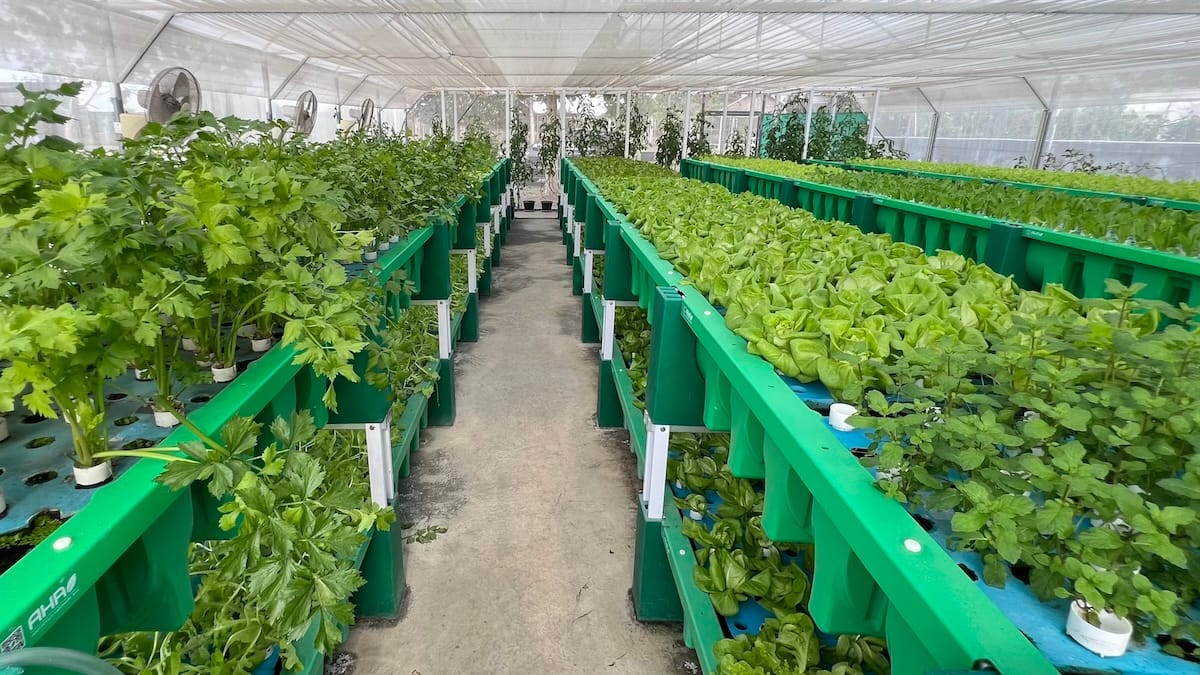
Once we have decided on our desired crop mix, we need to determine the size of the growing area required to meet our production target. Ceres Production knows the productivity of each vegetable under various environmental conditions. These conditions include the daily light duration and the water temperature. Ceres Production computes this growing area for us.
Farm layout
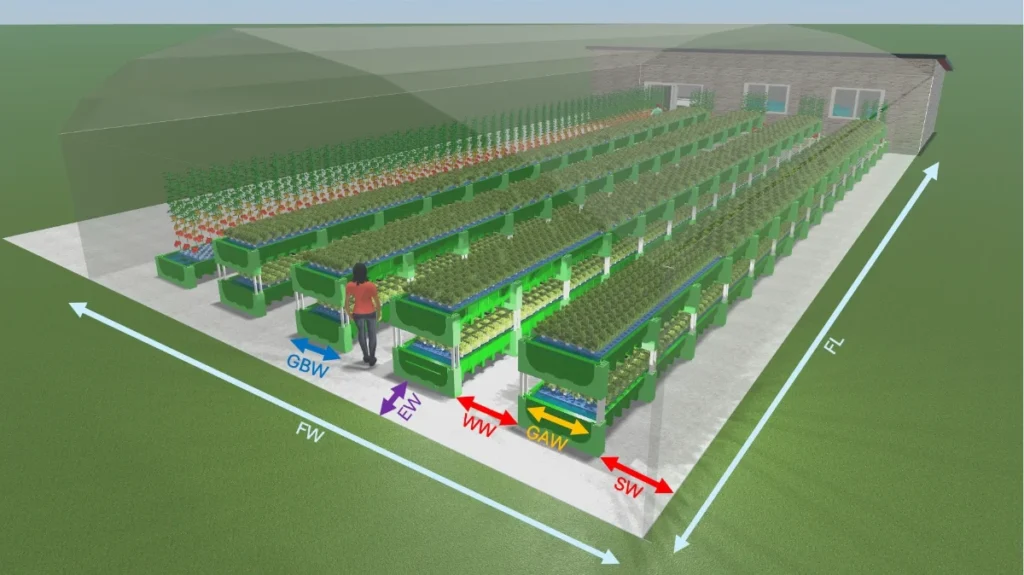
From this required growing area, we complete the layout of our farms. AHAS Ceres Production assists with this process. We only need to input the width of our greenhouse, the walkways, and the grow beds.
Nutrient and fish feeding requirement
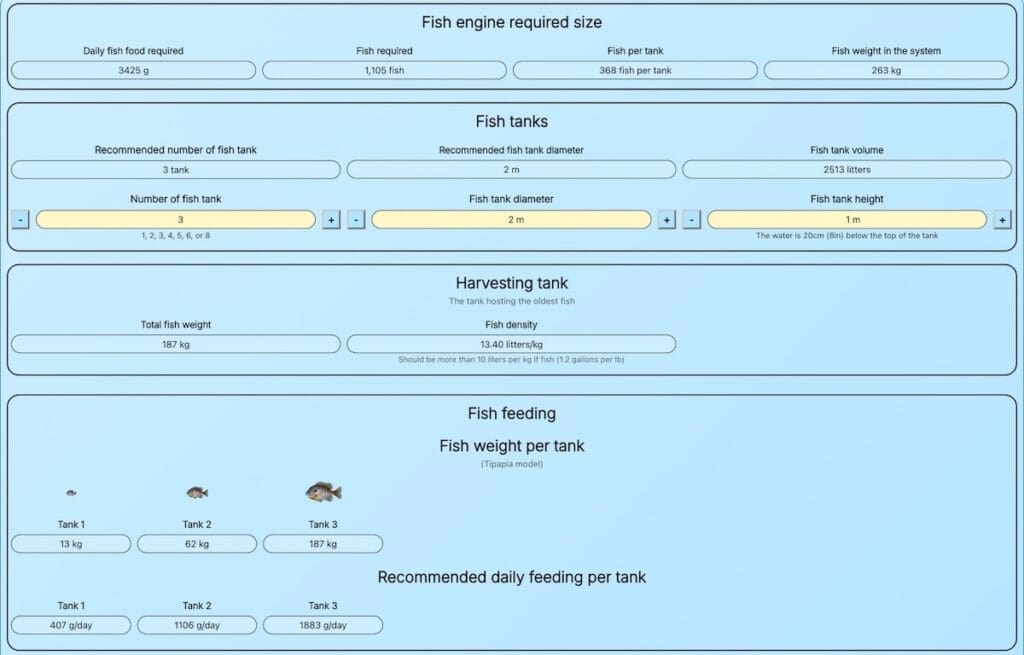
Then, we compute our farm’s nutrient requirements. Ceres Production adds up each vegetable’s individual requirement to compute the total farm requirement and converts it into the required daily fish feeding.
The daily fish feeding drives the size of our fish engine. Ceres Production includes a robust fish model and advises on the required number of fish to process this amount of food. We decide on the size and number of fish tanks so the fish have sufficient water space to live in. Since each fish tank hosts fish of different sizes, we will need to distribute the total daily fish food among the tanks according to the fish’s size.
Aquaponics fish engine design
Ceres Production handles every step of the fish engine design. We only need to select the size and number of tanks. Ceres Production flags if our fish tanks are too small.
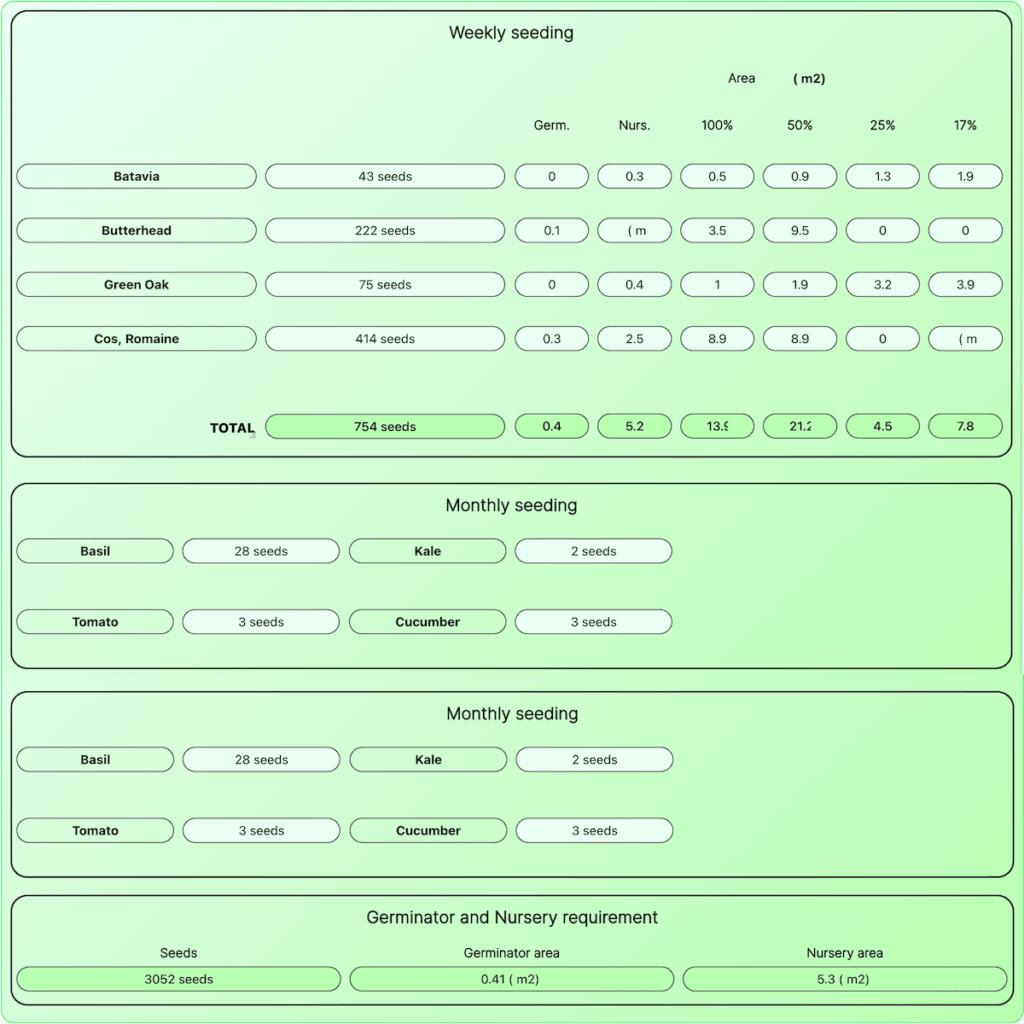
Operations planning: the required germination and nursery area, and the weekly seeding plan
Some vegetables grow in batches and need regular seeding. To maintain regular daily vegetable production, it is crucial to include a properly sized germination and nursery.
In order to establish a contnous aquaponics vegetable production, we also need to seed regularly according to an appropriate weekly seeding plan.
Farm design optimization
Now that our initial farm design is complete, we can fine-tune it.
We can compare productivity among our selected crops and, if our market can accommodate it, increase production of high-revenue vegetables and decrease production of low-revenue ones. We use the Ceres Production summary report to optimize our crop selection.
A 5 °C water temperature difference leads to over a 50% increase in productivity. It is therefore important to evaluate the impact of the environmental conditions and decide whether to add grow lights or a water temperature control system to maximize production. We just need to change these inputs, and Ceres Production instantly recomputes the farm design

The remaining aquaponics design phases
The next steps of our design involves:
- Hydraulic design: optimize water flow, pump size, pipe size, …
- Climate controller and associated hydraulics
- Power and energy requirements: greenhouse climate control system, lighting, water flow energy, oxygenation energy, …
- Solar system requirement
- Germination and nursery area design
- Seeding and crop processing area
- Overall farm layout for optimum workflow
- Financial evaluation: CAPEX, OPEX, and profitability analysis.
All these steps are included in the AHAS Ceres Professional Design and Ceres Professional Companionage services.
AHAS Ceres Production drastically facilitates the Aquaponics Farm Design process and is available to anyone who wants to design an aquaponics system or farm. When further expertise is needed, the Ceres Professional services are available.
Visit aha-services.com for more details.
Copyright ©
AHAS CO.,LTD.
All rights reserved.