Botanical
Calculator
Production
Professional
Lab test
1-on-1

Aquaponics Balance Calculator
Don’t guess !
Use our expertise
Design and build a balanced farm
Compute the perfect fish engine size for your vegetable target.
Ceres-Calculator
A small car engine can't power a big truck. A truck engine is oversized for a small car.
Similarly, your aquaponics fish engine should be sized to your growing area.
Features
Fish engine smart sizing recommendations
Optimized weekly seeding plant
Outputs expected monthly production.
Production optimization through growing at different densities.
Includes Ceres Botanical for valuable information on growing over 50 vegetables in aquaponics.
How many fish do I need?
How much should I feed the fish daily?
What should be the size of my fish tank?
What are the best practices for growing each plant?
Two modules: Trays and Pots
Module 1 - Trays
Use Module-1 to size your system for continuously growing plants.
Module 2 - Pots
Use Module-2 to size your system for batch-grown plants.
Module 1 - Continous plants in trays
For plants grown continously on a specific area.
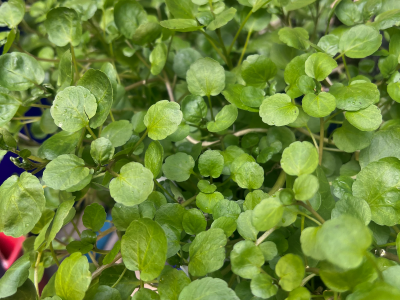
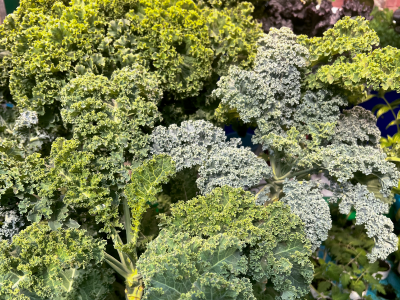
Continous small plants
Mizuna
Rocket arugula
Spinach
Watercress
Strawberry
Cooking herbs
Chives
Mint
Parsley
Oregano
Rosemary
Sage
Tarragon
Thyme
Coriander
Midsize plants
Basil
Bell pepper
Broccoli
Cauliflower
Celery
Chili
Edamame
Kale
Okra
Pandan
Zucchini
Tall plants
Bitter Gourd
Cherry Tomato
Cucumber
Eggplant
Green Beans
Melon
Pumpkin
Squash
Tomato
Watermelon
Enter
Number of trays in the farm
Area of each tray
Monthly production per tray
Ceres provides
Monthly production
Daily feeding rate
Number of fish required
Fish tank size
Module 2 - Batch plants in pots
Batch small plants
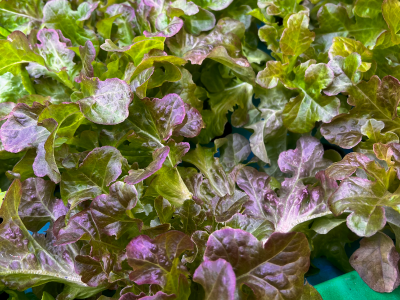
Batavia
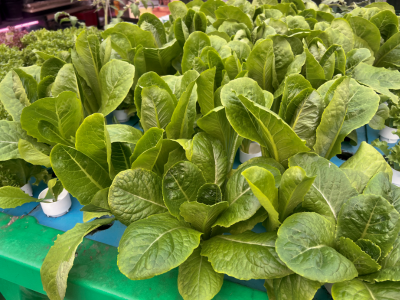
Butterhead
Cos (Romaine)
Frilice
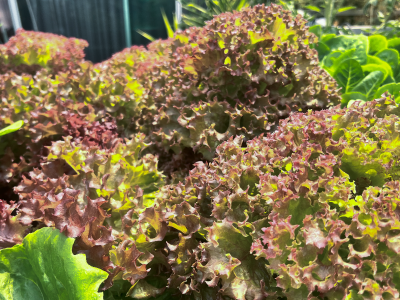
Green Coral
Green Oak
Iceberg
Red Coral
Red Oak
Cabbage
Kai Lan
Morning glory
Pak Choy
Baby Pak Choy
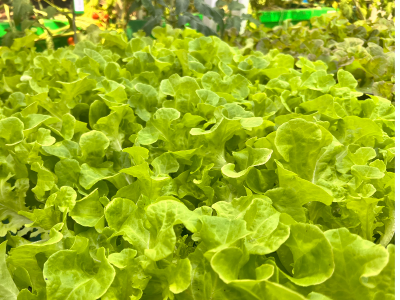
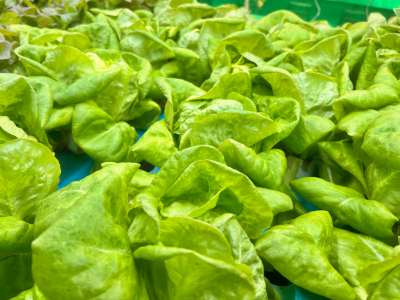
Variable plant density growing schedule
Plant nursery
Process duration
Germination: 7 days
Nursery: 2 weeks
Ceres gives you:
The weekly seeding requirement
The number of pots in the nursery
100%
density
When plants in the nursery get larger than the pot, they are moved to boards at 100% density.
50%
density
When plants need more space, the 100% density boards are split into two 50% density boards.
25%
density
Some lettuce varieties need an additional period at 25% density.
This process significantly impacts monthly production. Find more details in the Production Planning learning section and Plant Care section.
Enter
Number of slots in a board
Number of boards in the farm
Harvesting weight per plant
Seeding efficiency
Growing duration at 100% density
Growing duration at 50% density
Growing duration at 25% density
Ceres provides
Monthly production
Seeding requirement
Nursery size
Number of boards per density
Number of plants per density
Daily feeding rate
Number of fish required
Fish tank size
+
Would you like to predict your farm production?
The Advanced Aquaponics farm-design App
Select up to 30 plants among 50+ options:
Your desired plant
Your targeted monthly production
Your sales price
Then Ceres does the rest
Computes each plant mineral requirements
Sizes the required farm area
Sizes the aquaponics fish engine
Design your weekly seeding plan according to your production targets
Advises on mineralization supplement in relation to the crop mix
Provides a summary of the farm vegetables and fish production and revenue expectations
Provides valuable information and tips on aquaponics farming for each plant.
Takes into account growlight duration and water temperature
Customer reviews and feedback
Latest reviews
Ceres Production is exactly what I was looking for
I used Ceres Calculator a few months ago and asked AHAS for a more advanced app to design my farm based on the vegetables I wanted to grow. They did it !!!!!!!!!!!!!!!!!
Ceres Production is totally amazing. And computing the fish food requirement based on the plant needs is definitely the way to go.
Thank you so much.

Response from AHAS
Wade, we are very pleased to know you found Ceres Production useful. Thank you for your feedback and dedication to AHAS apps.
It's working!
I heard about aquaponics, but I did not know how to balance my DIY system. I built it based on advice from the Ceres Calculator, and it works well. I even purchased Ceres Production after that to move to the next level and expand my farm.
Aquaponics is amazing!
Very simple app
Ceres Calculator is great, but would it be better to design a farm for selectable crops?
Response from AHAS
Hi Wade, Ceres Production is coming out very soon. Stay tuned!
Copyright ©
AHAS CO.,LTD.
All rights reserved.